by Graziella DiNuzzo
Over the years, we’ve heard the horror stories of housing construction material falling apart or children’s toys manufactured with toxic chemicals. Don’t these products have standards?
Thankfully, many manufacturers around the world adhere to strict standard specification requirements, ensuring consumer safety and confidence.
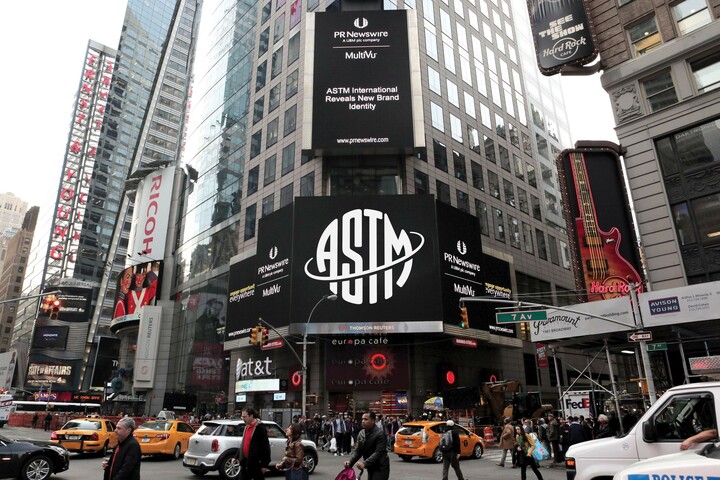
ASTM International is one of the world’s largest international standards development organizations, and “we support public health and safety by providing the specifications and test methods used for products that consumers routinely encounter, including for example, automotive fuel, construction materials, children’s toys and crayons, medical devices, drones, protective footwear and recyclable plastics,” explains Teresa Cendrowska, ASTM International Vice President, Global Cooperation.
Dr. Charles Dudley, a scientist responsible for procuring the paint, steel and oil for the Pennsylvania Railroad is credited for creating the original movement to ensure that raw materials adhere to specific material specifications.
In 1878 Dudley published a report entitled, “The Chemical Composition and Physical Properties of Steel Rails,” which concluded that a formula using mild steel produced a longer-lasting rail than hard steel. Since Dudley wielded purchasing power, his suppliers agreed to change a formula to meet his standards.
“A good specification needs both the knowledge of the product’s behavior during manufacture and knowledge of those who know its behavior while in service,” Dudley said in defending the need for open dialog between buyers and suppliers – and ultimately the formation of the International Association for Testing Materials (IATM).
In 1898, seventy members of the IATM met in Philadelphia to form the American section of the IATM, dedicated to “the development and unification of standard methods of testing; the examination of technically important properties of materials of construction and other materials of practical value, and also to the perfection of apparatus used for this purpose.”
Today ASTM International has 262 staff located around the globe who support the development and delivery of ASTM’s 12,500 voluntary, consensus standards, and related services.
Ms. Cendrowska explains, “ASTM International standards serve 90 industry sectors from petroleum, construction products and consumer products, to the environment, medical devices and new technologies such as additive manufacturing and unmanned aircraft systems (drones). Because standards are an effective way to transfer technology to the marketplace, support health and safety, underpin regulation and enable trade there’s a regular need for updated and new standards that are responsive.”
So how does it work?
ASTM has over 30,000 volunteer members from 150 countries who come together, and through science and engineering, work to find best performance in manufacturing and materials, products and processes, systems and services. Through technical committees, businesses, governments, and individuals collaborate openly to ensure the standards combine market relevance with the highest technical quality.
Discussions can become very technical in the committees and subcommittees responsible for drafting the standards. For example, in a paper published for the airline industry, ASTM laid out a standard, which of course aircraft experts understand, “F34.06 standards include the following…… A specification for phenolic raw materials for use in bearing cages (F2953) covers basic characteristics for porous laminated phenolic materials intended for use as instrument and thin-section ….”
As Vice President of Global Cooperation, Ms. Cendrowska leads a team which currently manages and sustains over 110 Memorandums of Understanding (MOU) partnerships on six continents.
“My team and I focus on encouraging and supporting the use and application of ASTM International standards and services in transitioning economies. These efforts are consistent with ASTM’s commitment to serving global societal needs and support the growing global interest in removing barriers to trade, advancing quality infrastructure and resilience and achieving the UN Sustainable Development Goals."
The team also “provides training and technical assistance through virtual and on-site programs, and identifying and engaging public and private sector partners, both domestically and internationally, to collaborate with ASTM in supporting the uptake of US-based international standards, codes and regulatory practices.”
With the help of technology, ASTM International has been able to respond to market needs and requirements – even during the COVID-19 pandemic. Like almost every organization around the globe, “we’ve moved to a full on-line process. Our members have embraced the tools and continue to develop the standards that industry and the public sector need and use. Related services such as proficiency testing and training have also moved to a virtual environment.”
The World Trade Organization endorses the use of international standards as defined by six principles: openness, transparency, impartiality and consensus, relevance, coherence, and development dimension, rather than by a standard’s label.
“This modern definition of international standards is included in the standards chapter of the US Mexico Canada Trade Agreement . ,The more inclusive definition of international standards replaces the limiting text that had been part of the NAFTA,. It offers industry more options when deciding which standards to use. The change is beneficial for trade and commerce and ASTM.” says Ms. Cendrowska.
ASTM International has also been able to encourage the use of its standards in niche markets where manufacturers, operators and owners are able to meet regulations, “for example unmanned aircraft systems (drones), where other standards don’t exist, regulators around the world, such as EASA, FAA, TCCA, IATA are calling out one set of standards - the ASTM standards. This consistency in cited standards is economical and efficient and helps designers, manufacturers, operators and regulators.”
Ms. Cendrowska reminds me that ASTM International standards are voluntary and aren’t mandatory unless cited in a law or called out in a contract, “Users of the ASTM mark or logo can opt to meet ASTM standards and self-represent that their products or services comply with specific ASTM standards. The users may self-confirm or independently confirm compliance with the standard. ASTM does not endorse, approve, sponsor or certify compliance - unless the user is a participant in ASTM’s certification program operated through its affiliate SEI.”
These four letters A S T M have been giving the world’s consumers peace of mind; you may want to look for them on your next product purchase.