DENVER — A checkerboard of low-slung buildings and vacant parcels, the River North Art District in this fast-growing city has developed a funky vibe over the last few years.
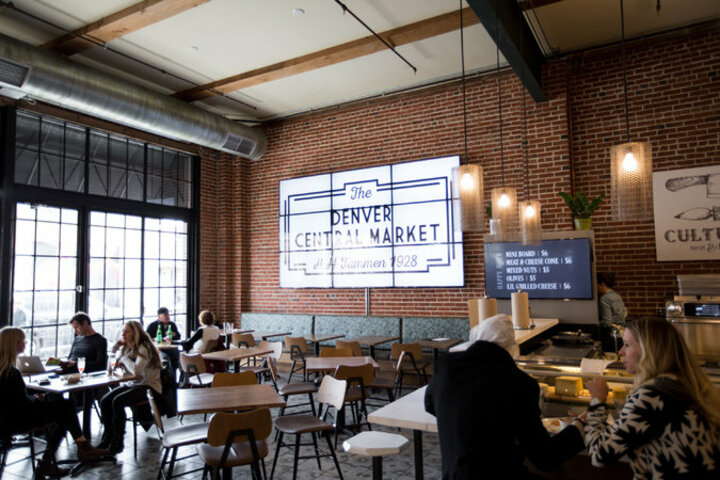
Among the unconventional work spaces and restaurants in the district, known as RiNo and north of downtown, is Comal, a lunch spot with Latin American cuisine where women from low-income backgrounds are learning how to run a business. In RiNo’s recently opened Denver Central Market, shoppers can grab a sandwich, coffee or fresh fish,or sit at a bar and take in the scene.
The neighborhood has attracted artists who helped gentrify the old and neglected industrial expanse, which in its dilapidated condition was long considered the back door into downtown from westbound I-70.
Business promoters now want to create an international trade hub in the district and are ready to capitalize on what they see as one of Denver’s last development frontiers. The developer Sean Campbell and World Trade Center Denver, a nonprofit organization that helps regional businesses, have proposed building a $200 million international business campus in RiNo.
Mr. Campbell, a former Wall Street bond trader who moved to Denver in 2010, is hardly the first investor to descend on RiNo in recent years, though the development’s successful completion would rank as one of the most ambitious projects to date. He considers it the right place for a global commerce center, citing as draws the city’s growing corporate roster, affordability and active outdoor culture.
“Whether you’re in New York or the San Francisco Bay Area, Denver is going to be 60 cents on the dollar for the foreseeable future compared to those markets,” Mr. Campbell said. “We’re seeing large companies saying, ‘Places like Silicon Valley are nice, but we can use Denver and its Rocky Mountain backdrop as a lifestyle tool for recruitment and retention.’”
The first phase of the World Trade Center Denver project will include 250,000 square feet of offices and creative working space, a 200-room hotel, conference space, and shops and restaurants. It will be adjacent to a recently opened stop on a light rail line that connects Denver International Airport to Union Station downtown, about two miles away.
Mr. Campbell is seeking tenants and financing, and he anticipates preleasing about 60 percent of the office space before beginning construction late next year.
The tenant giving the project its name, World Trade Center Denver, needs a new home for events that its old location could not accommodate, Karen Gerwitz, president of the local organization, said. The group, which is part of the 322-member World Trade Centers Association, moved out of a downtown building in 2015 and operates in a temporary location.
The World Trade Center Denver team and city officials supporting the project say it is the right time to promote the city internationally. They cite average year-over-year employment growth of 3.5 percent in the metro area from 2013 to 2015, and growth of more than 3 percent through October this year.
Denver’s diversified economy relies less on the boom-and-bust industries of energy and real estate than it did a few decades ago, they contend, and to a large degree, they credit the city’s airport. When it opened in 1995, officials did not anticipate the high number of visitors, business travelers included, who would make Denver a destination rather than a stopover, said Tom Clark, chief executive of Metro Denver Economic Development Corp.
Since then, the city has worked to increase nonstop flights to international destinations, he said. Today those include Munich, Tokyo and London, and the airport is pursuing flights into Dubai, Paris, Beijing and other markets.
“I’ve lived through oil and gas ups and downs and the dot-com bust, but in none of those times did we have such a diverse economy,” Mr. Clark said. “The transformative nature of the airport has turned us into a much different economic region.”
Just how different can be seen in RiNo, where private investors and the city are spending hundreds of millions of dollars to build it up and create a new gateway into Denver. Start-ups, and technology and creative companies have been migrating to the district for about the last five years, attracted to the area’s cachet, as well as new buildings and converted warehouses that are now offices, food halls, brewpubs and entertainment venues.
Larger established firms have also moved to the neighborhood or are planning to, including Uber, HomeAdvisor, a University of Colorado medical campus office and Boa Technology, a firm focused on closing systems for footwear like snowboarding boots.
At the same time, speculative investors have driven up land costs to an average of roughly $150 per square foot, which is as much as five times what they were four years ago, said Tim Harrington, an executive managing director with Newmark Grubb Knight Frank in Denver.
In 2013, the developer Jason Winkler and his wife, Ellen, converted a warehouse that became 150,000 square feet of work space called Industry. The $35 million development, in which Clarion Partners acquired a majority stake last year, features shared meeting space, four kitchens and perpetually tapped beer kegs to fuel collaboration among the building’s tenants.
“Right now this is the urban part of Denver that can grow,” said Mr. Winkler, who has also teamed up with Clarion to develop the $58 million Industry RiNo Station, another creative work space several blocks to the southeast. “I think our vision for what the neighborhood would become was pretty accurate, but the timeline has been a lot faster than we expected.”
Other developers have added similar collaborative office environments in RiNo, and some three million square feet of office space is planned for the area, said Mr. Harrington, who is marketing a large mixed-use campus proposed by the local developer Westfield Company on 14 acres in the district. He estimated that as more office projects in RiNo are completed over the next several quarters, tenants would most likely pay $3 to $5 less per square foot than they would in the downtown and Lower Downtown submarkets, a discount of roughly 10 to 15 percent.
RiNo’s rapid growth, however, has stirred trepidation among artists and other early pioneers, who are worried that gentrification will eventually take away the neighborhood’s grit, said Jamie Licko, executive director of the RiNo Art District. Aiming to prevent that fate, property owners have banded together to fund infrastructure and other improvements and to push for zoning that preserves RiNo’s character and fosters affordable housing, she said. Among other efforts, the group is contributing $3 million to help pay for a recently begun $29 million redevelopment of Brighton Boulevard, which is improving the former horse carriage road and adding sidewalks, bike lanes and landscaping.
Still, the developer Kyle Zeppelin anticipates more tension between newcomers and established property and business owners in the area. In 2000, Mr. Zeppelin’s father, who began investing in rundown Denver neighborhoods in the 1970s, moved into a former Yellow Cab facility on eight acres in RiNo and renamed it Taxi. Kyle joined him about a year later and over time they expanded the project into a mixed-use development on 28 acres that encompasses offices, retail, housing and restaurants, including Comal.
One future disagreement is likely to be housing, Kyle Zeppelin predicted. Lenders have cooled to Denver apartment development, and he says he believes that market conditions are encouraging high-end condominium projects instead.
“I don’t think that’s what RiNo needs or wants,” said Mr. Zeppelin, who with his father is also developing a boutique hotel in RiNo next to the Source, a red brick foundry that they converted into an artisan food market.
“But there’s a disconnect between the urban fabric and culture of the neighborhood and what speculators want to do,” he continued. “It’s a threat to the future potential of RiNo.”
Correction: December 29, 2016
An earlier version of this article misstated the approximate average cost for land in the River North Art District of Denver. It is $150 per square foot, not per acre.