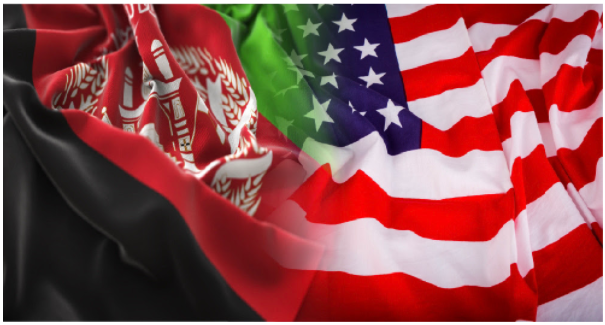
DE/Afghanistan Summit Draws VIPs Across Globe

March 31, 2021

Kabul, Afghanistan, March 9, 2021—Business leaders from Delaware and Afghanistan met via a “live” virtual conference hosted by the World Trade Center Delaware and WTC Kabul to hear about a host of present and future opportunities for trade and investment between both countries and take advantage of a wide range of resources readily available.

Featuring a VIP speaker line-up that included U.S. and Afghanistan Embassy officials and government leaders, experts from the World Bank, US Department of Commerce and local businesses, the two-hour conference was the start of what World Trade Center Delaware President Carla Stone promised would become an ongoing partnership and continued talks to come. “We are already planning a second program so stay tuned,” she said.

U.S. Senator Chris Coons and U.S. Rep. Lisa Blunt-Rochester addressed the conference virtually, encouraging US businesses that now is the best time to partner with Afghanistan in terms of trade, investment and doing business there. “With President Biden and the new administration, the US is ready and willing to be a partner on the world stage,” Rep. Rochester stated.

The conference gained its name because there is a distinct difference between how Afghanistan is viewed in the news and the reality that it has made great strides in the past several years to foster a more secure, progressive climate for U.S. companies to do more business there said Zabihullah Ziarmal, CEO of CEFE Group International and Chairman of WTC Kabul. Instead of “war and conflict, violence and instability, poverty and corruption” the reality is that there is “life and business, hope and prosperity and lots of business opportunities in terms of trade and investment” there, he said.

Ranked as the top country in trade growth with $1 billion in exports and a goal to increase that to $2 billion in 2023, H.E. Roya Rahmani, Afghan Ambassador to the United States and the first female ambassador from Afghanistan, attributed this growth to the huge youth population in her country. She said that sixty-five percent of the Afghan population is under twenty-five years old, eager to work, have never known a world without a close US-Afghan partnership, and are invested in future industries like telecom, Fintech and biotechnology.

While Afghanistan produces traditional products such as spices, new industries such as energy and minerals offer opportunities as well, conference leaders added. For example, there is one trillion dollars’ worth of lithium that is unmined, and the country is home to fourteen of seventeen rare earth minerals.

Ian J. McCary, Deputy Chief of Mission, U.S. Embassy Kabul said the country is in “a pivotal point in its history” despite the ups and downs it has faced, making great progress in infrastructure, security, financing and even social issues such as improved education and opportunities for women and minorities. McCary said there are over 4,000 products to be imported and that businesses now more than ever can work within the country’s “system of preferences” that supports doing trade there, which is backed by its government.

Through its five-year comprehensive plan, Afghanistan’s objectives include improving transit, legal channels, industrial growth, increasing imports and exports, establishing governmental “one stop shops” that focus on cutting the cost of doing business and creating public-private partnerships. There are 148 projects currently ready in mining and energy, and a portfolio of $4.5 billion in investments waiting to be had.

Diplomats at the conference said there are already more than 6000 companies in Afghanistan’s new electronic “procurement portal” and legal blocks are being removed to pave the way for US companies who are doing business there, including General Motors, with 322 opportunities already on the horizon in the coming year.

Christopher D. Clement, Sr. Dir., Government Affairs Siemens Energy, Inc. shared its success story at the conference. With 11,000 employees and legacy healthcare and rail operations based in Delaware, Siemens established an energy presence in Afghanistan in 2019 when it built the first natural gas power plant to be installed there since the 1970s giving power to 200,000 homes, meeting “Afghanistan’s high demand for electricity but insufficient domestic supply.” Clement said Siemens’ success shows how important public-private partnerships are for small to mid-sized businesses that may not have the huge size and scale of larger corporations. Siemens was aided by its partnerships with the government of Afghanistan, its banks, the US Embassy, Dept. of Commerce and World Bank to name a few, which were all represented here at the conference. “It’s good to have a strong team to support you,” he said.

Similar to the Delaware Prosperity Partnership, Afghanistan has a PPP (Public Private Partnership) and is opening legal and electronic banking opportunities like the new e-portal of the National Procurement Authority known as AGEOPS.net. which will “cut red tape” and “expedite, streamline and boost investor security,” said Kabir Khan Isakhel, Chief Legal Advisor to the President of Afghanistan. He said that just today, five of six PPP projects were approved, and the goal is to make Afghanistan an “investment destination.”

Eric Casey, CEO of GT USA the Port of Wilmington, encouraged Afghan businesses to look at Delaware’s Port as being a viable option for its exports, especially fruits, vegetables, tree nuts snack foods, spices, teas and other perishable goods that can be distributed and sold quickly from the easily accessible hub.

Other speakers at the conference included Atta Nasib, General Dir. Afghanistan Investment Facilitation Unit Harris Manan, Dir. General of Afghanistan President’s Office for Policy & Strategy, Abdul Hadi Nijrabi, Deputy Chief of Mission, Embassy of Afghanistan, DC, Jocelyn A. Steiner, Attorney Advisor, Office of the General Counsel of the United States Department of Commerce, Nancy Bikondo-Omosa, Senior Procurement Specialist The World Bank and Abdul Qadir Bayman, Founder & CEO, World Trade Center Kabul Afghanistan.

Business owners from small start-ups to large global companies were given the chance to ask questions of the panels and world leaders on the virtual conference stage which was supported by the World Trade Center Washington D.C. and World Trade Center Harrisburg (PA). For more information visit World Trade Center Delaware at www.wtcde.com

More News

Global Trade, Powered by Women

March 9, 2026 - At World Trade Center Delaware, we’re honoring International Women’s Day by converting visibility into export deals, market access, and measurable growth for women-led companies across the state. Why this is a strategic priority for WTC Delaware When the World Trade Centers Association issued its International Women’s Day Call to Action, World Trade Center Delaware had to turn the moment into action because Delaware’s women-owned incorporated businesses aren’t a feel-good feature. They’re a global growth engine. Women own about one-third of businesses globally, yet their participation in international trade remains under-leveraged creating one of the largest unlockable opportunities for export growth worldwide. In Delaware, women own ~42% of businesses (approximately 30,400 companies), representing a ready pipeline of high-potential exporters across priority sectors. Our role is to reduce structural obstacles, increase resources, and create credible pathways so businesses can move from interest to execution. Our Results-Driven Call to Action Women Exporter Pipeline (IWD Week Launch): We’re building a targeted pipeline of women-led companies ready to export or scale internationally, with a clear next-step plan for each participant (market targeting, go-to-market pathway, and support needs). Export Acceleration Office Hours: Dedicated 1:1 advisory sessions focused on outcomes—market selection, partner introductions through the WTCA network, trade resources, and export readiness actions businesses can implement immediately. Women in Trade Connector Roundtable: A structured connector session pairing women-led firms with export enablers (logistics, compliance, financing, and service partners) and international contacts to generate qualified leads and actionable introductions. Spotlight with Purpose: We’ll highlight up to three Delaware women-led companies in global trade, selected as honorees from the nomination pool. Each honoree will receive a feature story as part of a formal news release, dedicated social media recognition, and inclusion in a press release issued in April. The objective is to drive partnerships, procurement conversations, and market-entry opportunities—not just recognition. March 8th marks the public announcement of this initiative, with the nomination window open through Friday, March 27, 2026. How to participate Nominate a women-led business (or yourself) and share one target market + one export objective for 2026. Nominations will be accepted through Friday, March 27, 2026. Direct nominations should be submitted at the following link: https://web.wtcde.org/atlas/forms/prospect/7 WTC Delaware will align selected participants with the right resources and introductions to move from intention to international growth—because “we the people” are the most powerful voice. Nomination criteria (WTC Delaware – International Women’s Day) Eligibility Delaware-based company (headquartered in DE or with a significant DE operating presence). Women-led (meets at least one): Woman founder/co-founder and active in leadership, or Woman CEO/President/Managing Partner, or ≥51% woman-owned. Export readiness Fits at least one: Currently exporting, or Actively preparing to export within the next 6–12 months, or Seeking to expand into new international markets. Strategic fit Clear product/service offering with a defined customer or industry use case. Ability to support growth responsibly (capacity, supply chain, or delivery plan). Required nomination details Company name, website, and primary contact. Brief description (1–2 sentences) of product/service. One target market (country/region) and one 2026 export goal (e.g., distributor, first purchase order, partner MOU, regulatory pathway, licensing, etc.). Top 1–2 support needs (e.g., market research, introductions, financing, compliance, logistics). Selection priorities (if nominations exceed slots) Companies with specific, time-bound export objectives. Potential for near-term outcomes (qualified introductions, partner conversations, pilot opportunities). Diversity across sectors (e.g., biotech, food/ag, manufacturing, consumer goods, services). Commitment to participate in one WTC Delaware activity (office hours, roundtable, or follow-up). Read More

Climbing Mount Kilimanjaro

February 3, 2026 - What Does Climbing Mount Kilimanjaro and the World Trade Center Delaware Have in Common? There’s a moment in life when you realize you’re no longer operating in your comfort zone and that the only way forward is to rise into a higher version of yourself . I traveled solo for 26 hours, one way, to Tanzania, Africa, to climb Mount Kilimanjaro, the Lemosho Western Route. With a strict 33 pound weight limit, meeting 12 strangers to trek 7 days to summit and then immediately descend (which is just as difficult). Reaching the summit, Uhuru Peak at 19,341 feet above sea level. Some describe the climb as starting at the equator and ending at the North Pole. We went through 5 distinct climate zones ending at the Arctic Zone. Just for reference Everest Base Camp in Nepal is 17,598 feet and Delaware is about 60 feet above sea level. For me, that moment wasn’t a boardroom or a keynote stage. It was on the slopes of Kilimanjaro where ambition meets thin air, where confidence gets quiet, and where leadership becomes less about what you say and more about how you move. And here’s what surprised me most: I’ve read almost every leadership book on the market . I’ve studied frameworks, strategies, and systems. But for 7 days, I witnessed something no book can fully capture a perfect orchestra of teamwork , guided not by ego or titles, but by one common goal and the collective will to succeed. On summit day (Day 7) , we started from Barafu Camp at 15,331 feet and spent 10 hours trekking roughly 3 miles to the glacier peaks at 19,341 feet, Uhuru Peak. Three miles doesn’t sound like much until you’re doing it in the dark, in the cold, at altitude, with every breath earned. It was intense, humbling, and completely outside anything that felt familiar. And yet we as a team of 12 strangers came together and did it. The Summit Wasn’t “Mine.” It Was Built By A System. Our climb took 74 Tanzanian locals working in disciplined coordination: cooks, camp managers, support staff, guides, and porters all doing their part with pride and precision so our team of 12 could keep moving safely and steadily. People celebrate summit photos. What they don’t always see is what the summit represents: preparation, logistics, risk management (the Barranco Wall aka the Death Wall at 12,795 feet), steady problem-solving, and relentless attention to human needs, hydration, warmth, nutrition, timing, morale, and sleep was critical. That’s not just mountaineering. That’s leadership. Out Of Your Comfort Zone Is Where Clarity Lives On Kilimanjaro, I wasn’t in control of the terrain, the weather, or the altitude. I couldn’t “power through” on will alone. The mountain which the locals called "Her Majesty" demanded respect, pace, humility, adaptability, and a willingness to let the process shape you. Global growth is the same. When Delaware businesses expand internationally, they enter conditions that can’t be forced: new regulations, unfamiliar markets, cultural nuance, logistics, currency risk, and relationship-driven trust building. It’s exciting but it’s also uncertain. And uncertainty is where strong leadership either sharpens or slips. The work of WTC Delaware is to help companies navigate that shift with confidence turning complexity into a plan, and a plan into action. The Turning Point: We Became A Team, Not Just A Group Very early in the climb, we realized something that changed everything: As 12 strangers from completely different worlds we had the same goal, we were stronger as a team than as individuals. That decision made long before summit night became our advantage. We moved with awareness of one another. We checked in. We slowed down when someone needed it. We kept each other focused on the next step, not the whole mountain. That’s why all 12 of us summited which is very uncommon . It wasn’t luck. It was alignment. It was shared responsibility. It was each person refusing to let the team fracture under pressure. And that lesson is directly transferable to what I believe Delaware needs to win globally. International growth doesn’t happen through isolated effort. It happens through ecosystems, businesses, legislators, educators, investors, trade partners, and institutions moving with shared purpose. That is the platform we are building at WTC Delaware: a system where companies don’t have to climb alone. Pressure Reveals What Matters Summit night strips everything down to essentials. It’s cold, it’s long, and it’s honest. There’s no room for ego only execution. In global trade and investment, the “summit night” moments show up too: tight timelines, high-stakes negotiations, supply chain disruptions, and decisions made with incomplete information. That’s where leadership becomes practical: · Communicate clearly · Manage risk without losing momentum · Keep people steady when conditions get hard · Stay focused on outcomes, not noise On the mountain, every step mattered. In building WTC Delaware’s next chapter, every decision matters the same way because our members deserve results, not just activity. The Common Ground So what does summiting Kilimanjaro and leading WTC Delaware have in common? Both demand: · Humility to operate outside your comfort zone · Discipline to keep moving when it would be easier to stop · A support system strong enough to make success repeatable · Team alignment that outperforms individual strength · Measurable outcomes that prove progress On January 26 at 12:40 p.m., 12 climbers which included myself, supported by 74 support staff , moving as one team, step by step, into a glacier-lined world above the clouds reached Uhuru Peak 19,341 feet, the Roof of Africa, Mount Kilimanjaro. Now, I’m bringing that same blueprint home : build the system, align the team, respect the conditions, and keep climbing together!!!!! Come Join us on February 10th from 9:30 - 11:00 a.m. at the University and Whist Club, 805 North Broom Street, Wilmington DE 19806 for a complimentary breakfast and a chance to Meet and Greet. Read More