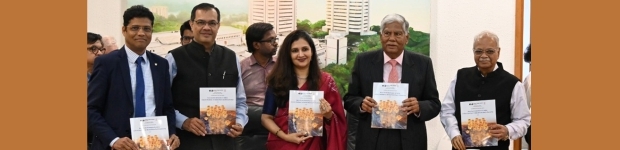
WTC Mumbai Leads Dialogue on Rare Earths

January 28, 2026

World Trade Center Mumbai in association with the All India Association of Industries (AIAI) and the Forum for Integrated National Security (FINS), convened a high-level Round Table Discussion on “Rare Earths, Minerals, and Strategic Materials: Securing Supply Chains for National Resilience in a Multipolar World.” The event brought together senior government officials, policymakers, industry leaders, diplomats, and domain experts to deliberate on India’s strategic vulnerabilities and opportunities in critical mineral supply chains.

Adv. Bal Desai, Secretary General, Forum for Integrated National Security (FINS), underscored the fragility of global supply chains in a multipolar world. He noted “majority of global rare earth processing and refining capacity remains concentrated in China and that many critical minerals are geographically restricted to a few regions. He stressed that in the current strategic environment, control over processing and refining capabilities is more critical than merely possessing mineral reserves”.

“Digital infrastructure, defence, space, nuclear energy, clean energy, and advanced electronics all rest on vulnerable material foundations. Export controls and refining monopolies have replaced pure economic competition. Securing supply chains is no longer optional it is a strategic imperative,” Adv. Bal Desai added.

Delivering the theme address, Dr. Jaijit Bhattacharya, Senior Fellow, FINS, and President, Centre for Digital Economy Policy Research, the current scenario emerges from past geopolitical disruptions, including China’s rare earth export restrictions to Japan. He highlighted the limitations of focusing only on mining without parallel investments in refining, substitution technologies, recycling, and intellectual property creation.

Dr. Bhattacharya pointed to the paradox in India’s position, “noting that while India ranks among the top three countries globally in rare earth deposits, it faces persistent challenges in high-temperature processing, monazite sand mining, access to finance, information asymmetry, and IPR constraints. Referring to the National Critical Minerals Mission (NCMM) and the evolving MMDR framework, he observed that despite strong geological potential, India continues to face long gestation periods, limited processing capacity, and dependence on foreign technologies”.

H.E. Mr. José Mauro da Fonseca Costa Couto, Consul General of Brazil in Mumbai, said “There are vast opportunities for India–Brazil collaboration in the critical minerals space. Brazil currently consists of 27 rare earth projects spread across seven states and holds significant reserves of lithium, cobalt, nickel, graphite, copper, and germanium. He emphasized that strategic cooperation could help diversify global supply chains and support downstream integration beyond China-centric ecosystems”.

Dr. Deependra Singh, President, Rare Earth Association of India, and former CMD of IREL, highlighted key structural and operational challenges facing India’s rare earth sector. He emphasized that processing and separation capabilities are central to value creation and global partnerships, cautioning against the misconception that the mere availability of mineral reserves ensures strategic security.

“The rare earth elements derive value only when integrated into advanced applications such as permanent magnets and high-end manufacturing”. Dr. Singh also pointed out that while several rare earth deposits were explored decades ago, operational permissions have been granted only in recent years, with regulatory and environmental clearances continuing to shape project timelines.

“India has large reserves of rare earth oxides around 7 million metric tonnes, but we are still heavily dependent on imports for processed materials and magnets,” said Dr. Vijay Kalantri, Chairman, World Trade Center Mumbai and President, All India Association of Industries.

“There is huge potential for India to grow in this sector. However, we face challenges such as lack of large-scale processing and separation technology, environmental and social constraints, and gaps in coordination across institutions. While some regulatory processes are becoming easier, new challenges are emerging as the sector expands. Addressing bottlenecks in technology, processing, and governance will be key for India to fully utilize its rare earth resources,” Dr. Kalantri added

Dr. Kalantri also highlighted the strategic importance of rare earth elements across sectors, from microchips used in consumer electronics to high-precision defence applications.

India possesses significant reserves of uranium, thorium, and rare earth-bearing minerals; however, technology gaps, regulatory uncertainty, and long development timelines constrain commercialization. The event ended on the note that the advancements, economical, technological and geopolitical, over a decade, will solve the current prognosis of policy certainty and ecosystem development.

More News

India–Norway Focus on Energy & Investment Ties

March 6, 2026 - World Trade Center Mumbai, in association with the All India Association of Industries (AIAI)and the Royal Norwegian Consulate General in Mumbai, successfully organized an International Trade Dialogue with Norway. This event brought together government representatives, industry leaders, and trade stakeholders to explore opportunities for strengthening India–Norway economic cooperation, particularly in sustainable energy, maritime innovation, and green technologies. The event was attended by H.E. Ms. Monica Nagelgaard, Consul General, Royal Norwegian Consulate General, Mumbai, reflecting the importance of India–Norway bilateral engagement. Mr. Fredrik Bjerke Abdelmaguid, Deputy Consul General, Royal Norwegian Consulate General, Mumbai, highlighted “Norway is keen to deepen economic engagement with India and expand cooperation across clean energy, sustainable maritime solutions, and innovation-driven sectors.” “The complementarities between Norwegian technological expertise and India’s growing industrial and entrepreneurial ecosystem align strongly with the India–EFTA TEPA framework. The USD 100 billion investment commitment under EFTA over the next 15 years represents a significant boost to bilateral cooperation.” added Mr. Fredrik Dr. Vijay Kalantri, Chairman, World Trade Center Mumbai and President, All India Association of Industries, said, “With India aiming to achieve Net Zero emissions by 2070 and targeting 500 GW of non-fossil fuel energy capacity by 2030, partnerships with countries like Norway, which are global technological leaders play a key role. Beyond clean energy, there is also significant potential for cooperation in sectors such as pharmaceuticals, maritime equipment, shipping technologies, and chemicals, where both countries can leverage their complementary strengths to expand trade and industrial collaboration.” Dr. Kalantri added, “Bilateral trade between India and Norway has crossed USD 1.2 billion, and with the India–EFTA Trade and Economic Partnership Agreement (TEPA), which came into effect after nearly 16 years of negotiations, there exists strong potential to significantly double the trade in the coming years.” Ms. Reena R Rao, General Manager, Mahatma Phule Renewable Energy and Infrastructure Technology Limited (MAHAPREIT), a subsidiary of MPBCDC, Government of Maharashtra, said “MAHAPREIT plays a vital role in promoting solar energy, green technologies, and inclusive infrastructure development to drive socio-economic empowerment. She further highlighted MAHAPREIT’s core verticals, including renewable energy and electric vehicles, agro-processing and biofuels, infrastructure and data centre development, as well as CSR-led initiatives, aimed at fostering sustainable and inclusive growth.” “MAHAPREIT continues to serve as a key facilitator in aligning Maharashtra’s clean energy ambitions with community-led development through strategic partnerships and innovative projects.” added Ms. Reena Mr. Azam Ali Khan, Senior Energy Advisor for India, NORWEP (Norwegian Energy Partners), said “There are emerging opportunities for collaboration in offshore energy, green transition technologies, and sustainable industrial practices. Strengthening partnerships between Norwegian companies and Indian enterprises, particularly MSMEs, can accelerate the adoption of energy-efficient solutions and contribute meaningfully toward achieving global climate goals.” The session also included an interactive Q&A session, enabling participants to engage directly with speakers and discuss practical pathways for enhancing bilateral trade, investment, and technology cooperation. The programme concluded with a Vote of Thanks deliveredby Capt. Somesh Batra, Vice Chairman, World Trade Center Mumbai, who acknowledged the Norwegian delegation and participants for contributing to a meaningful exchange of ideas and reaffirmed WTC Mumbai’s commitment to promoting international trade dialogue and economic collaboration. Read More

WTC Mumbai Strengthens Sri Lanka Trade Links

February 17, 2026 - World Trade Center Mumbai, in association with the All India Association of Industries (AIAI), hosted a business delegation from Sri Lanka to strengthen bilateral trade, investment cooperation, and industry partnerships between the two countries. The programme focused on enhancing commercial engagement across key sectors including textiles and apparel, handicrafts, lifestyle products, wellness industries, infrastructure, tourism, and IT services. The interaction facilitated over 300 B2B meetings between Indian and Sri Lankan companies, highlighting new opportunities for collaboration, market access, and supply chain integration Ms. Shirani Ariyarathne, Consul (commercial), Consulate General of Sri Lanka, said “India and Sri Lanka share a deep-rooted relationship that goes back millennia. We already have a Free Trade Agreement in goods, and we are now looking to expand cooperation through a Free Trade Agreement in services, which will further strengthen our economic integration. There are significant opportunities in tourism, textiles, automobiles, infrastructure development, and IT, and we are also exploring the further expansion of industrial zones to facilitate greater business engagement. With Sri Lanka offering preferential market access and a rapidly growing economy, the prospects for enhanced bilateral collaboration are extremely promising.” Dr. Vijay Kalantri, Chairman, World Trade Center Mumbai and President, All India Association of Industries, said “Since the Free Trade Agreement, India and Sri Lanka have come a long way in strengthening their economic partnership. Bilateral merchandise trade between the two countries has crossed USD 6 billion in FY 2024–25, and we expect this to double over the next five years. With nearly 4,000 products enjoying tariff concessions, there is significant scope to expand trade beyond traditional sectors. In this evolving geopolitical environment, strengthening regional partnerships is essential to ensure economic resilience and shared prosperity.” “There is high potential for collaboration in sectors such as textiles and apparel, pharmaceuticals, automobiles, agriculture and food processing, IT and digital services, renewable energy, and tourism. India remains one of the largest contributors to foreign direct Investment in Sri Lanka, reflecting strong business confidence and the long-term potential of the bilateral partnership. We are proud to be hosting our sixth delegation from Sri Lanka in the past six months, which reiterates the growing momentum in India–Sri Lanka engagement,” added Dr. Kalantri. Mrs. Mangala Madhuwanthi, Export Development Board Sri Lanka, said “The Sri Lanka Export Development Board plays a vital role in promoting the country’s export sector, with total exports exceeding USD 17.3 billion last year, including USD 13.6 billion in merchandise trade, these exports contribute nearly 19% to GDP. The delegation visiting today represents this diversity with companies from lifestyle, leather, wellness, renewable paper, handicrafts, and traditional batik products, and creative industry products showcasing Sri Lanka’s rich heritage and export capabilities”. The programme concluded with a Vote of Thanks by Capt. Somesh Batra, Vice Chairman, World Trade Center Mumbai, who expressed appreciation to the visiting delegation and participants for contributing to meaningful dialogue and strengthening economic bridges between India and Sri Lanka. He added that by partnering with Sri Lankan enterprises, Indian companies can leverage complementary strengths and access wider regional markets. Read More